The Last Page Is a Lie: How Dark Fiction Readers Are Turning Abandonment Into an Art Form

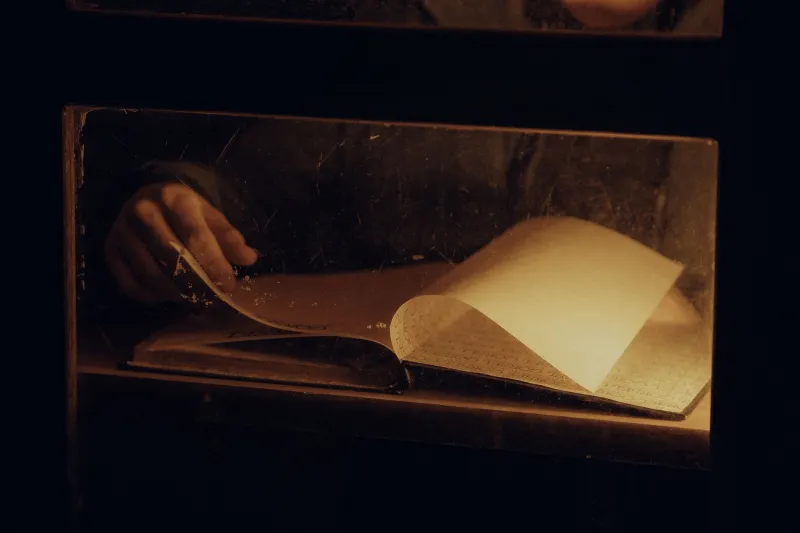
There is a particular kind of reader who dog-ears a page somewhere in the final third of a novel and never returns. Not because life intervened. Not because the book disappointed them. But because they made a choice — a deliberate, considered, almost philosophical choice — to let the story remain unresolved. To preserve it, in a sense, in amber.
This is not the abandonment born of boredom. This is abandonment as practice. And within the communities that orbit dark fiction in the United States, it is becoming something that resembles a quiet revolution in how literature is consumed and what we believe it owes us.
The Ending as Betrayal
The conventional literary contract is straightforward: a reader invests time, emotional labor, and imaginative energy into a narrative in exchange for resolution. The story builds, complicates, and ultimately delivers. This is the architecture of satisfaction that most publishing — commercial and literary alike — has been constructed around for centuries.
Dark fiction, however, has always existed in an uneasy relationship with that contract. The genre's most essential promise is not comfort but honesty — an honesty that frequently requires depicting the world as intractable, suffering as persistent, and evil as something that does not conveniently resolve itself at chapter's end.
For a growing number of readers, the problem is precisely that the ending arrives at all. When a horror novel ties its dread into something navigable, when a work of psychological fiction grants its fractured protagonist a species of peace, when gothic atmosphere gives way to explanation — the story has, in their view, flinched. It has retreated from its own implications.
"The ending is where most dark fiction apologizes for itself," says one reader who participates in an online collective dedicated to what its members call 'suspended reading.' "You spend three hundred pages in genuine darkness, and then the last fifty pages are the author trying to make you feel okay about having been there. I don't want to feel okay. The darkness was the point."
Suspension as Interpretive Practice
What distinguishes this phenomenon from ordinary reader abandonment is its intentionality. These readers are not disengaged. They are, in many cases, among the most committed and analytically sophisticated audiences that dark fiction attracts. They finish other books. They discuss craft with precision. They return to texts multiple times.
But they have developed a conviction — one that has spread through reading groups, independent literary forums, and the kind of Discord servers that never appear in mainstream literary coverage — that certain stories are more truthful when left suspended.
The theoretical underpinning is not complicated, even if its implications are radical. If a novel's central argument is that grief does not resolve, that certain kinds of damage are permanent, that the universe operates without regard for human desire — then an ending that provides narrative closure is, structurally, a contradiction of everything the book has argued. The form undermines the content. The story defeats itself.
Stopping before that defeat, these readers contend, is an act of fidelity to the work's actual vision.
Authors Who Understand the Argument
Not every author bristles at this interpretation. Several writers working in dark and independent fiction have expressed something close to sympathy for the suspended reading practice, even when discussing their own work.
One novelist, whose debut — published through a small press in the Pacific Northwest — spent its entire length refusing to explain the nature of its central horror, described her own ambivalence about endings: "I wrote the last chapter because I felt I had to. Because there's still this expectation. But honestly, the readers who stop at the penultimate chapter are probably reading the book I actually wanted to write. The final chapter is me making a concession to convention."
This tension between artistic intention and commercial or genre expectation is one that dark fiction navigates more visibly than most. The genre is populated by writers who are drawn to irresolution as an aesthetic value, yet who operate within a publishing ecosystem that still fundamentally rewards the delivered ending.
What Absence Constructs
There is something worth examining carefully in what the unfinished story actually produces in the reader who has chosen not to finish it. This is not a passive state. The suspended narrative continues to operate — perhaps more actively than a concluded one.
When a story ends, the reader's imagination is, in a sense, released from it. The questions are answered, or at least addressed. The interpretive work is largely complete. But a story held at the point of suspension remains a live current. The reader continues to inhabit its uncertainty, to turn its unresolved questions over, to exist inside its atmosphere rather than looking back at it from a concluded distance.
For dark fiction specifically, this sustained inhabitation may be the more authentic experience. Dread, after all, is not a state that resolves. Psychological complexity does not simplify itself into clarity. The emotions that the best dark fiction generates — unease, complicity, grief without object, fear without source — are emotions that resist the finality of the last page.
The suspended reader, in this light, is not abandoning the book. They are refusing to let it abandon them.
The Community That Built Itself Around the Gap
What makes this practice culturally significant rather than merely idiosyncratic is the degree to which it has generated community. Readers who stop before endings have found one another, and they have built interpretive spaces around the books they have chosen not to finish.
These spaces — some public, many private — function as something between a book club and an ongoing seminar. Members discuss where they stopped and why. They share the specific passages that felt like the story's true ending, the moments at which the narrative's essential argument was complete and any continuation would constitute dilution. They compare the books they have suspended with the books they have allowed to conclude, and they develop increasingly refined theories about which stories earn their endings and which do not.
The conversation is, in its way, a form of literary criticism — one that the academy has not yet developed vocabulary to describe, but that engages with questions of form, intention, and meaning with considerable sophistication.
The Radical Patience of Not Knowing
There is one more dimension to this practice that deserves acknowledgment, and it may be the most culturally resonant given the particular historical moment in which American readers find themselves.
We live in an era saturated with demanded resolution. Algorithms optimize for completion. Streaming platforms are engineered to eliminate the pause between episodes. Social media compresses every complex event into a narrative arc that must conclude before the next one begins. The cultural pressure to reach the end — of the show, the thread, the story, the argument — is relentless and largely invisible.
The reader who stops before the last page is, among other things, practicing a form of resistance to that pressure. They are insisting on the value of sustained uncertainty. They are refusing the consolation of the concluded thing.
In dark fiction, which has always understood that the most important truths are the ones that resist easy articulation, this refusal is not a failure of nerve. It is, arguably, the most faithful reading practice the genre has ever produced.
The shadow, after all, is most itself when it has no edge.