Trust Nothing, Feel Everything: How a Generation Raised on Deepfakes Found Its Literary Home in Deceptive Fiction
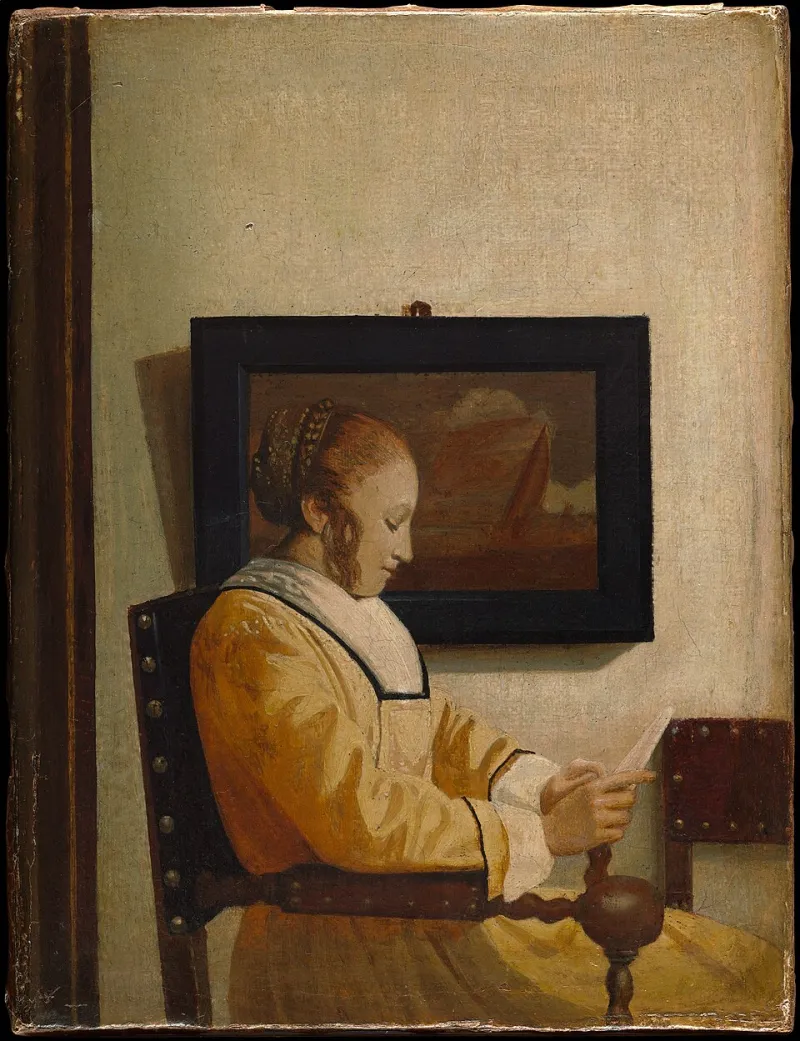
Photo: Imitator of Johannes Vermeer, CC0, via Wikimedia Commons
There is a particular kind of reader emerging in American literary culture right now — one who does not want to be comforted, does not want closure, and above all, does not want to be told the truth in any straightforward, digestible form. This reader is young, digitally fluent, and has spent the formative years of their intellectual life navigating a media landscape designed to mislead them. They have grown up inside the algorithmic funnel, have watched deepfake videos circulate as news, have scrolled through curated identities presented as genuine lives. And now, with considerable appetite, they are turning to dark fiction that lies to them — deliberately, structurally, and with artistic intention.
This is not irony. This is catharsis.
The Architecture of Manufactured Doubt
The unreliable narrator is not a new device. From Henry James's governess in The Turn of the Screw to the fractured testimony of Gone Girl's Nick and Amy Dunne, literature has long understood that a narrator's limitations, deceptions, or psychological distortions can function as a more honest lens on human experience than any omniscient voice could provide. What has changed is the cultural context in which readers are encountering these structures — and the emotional sophistication they bring to the encounter.
Gen Z readers, broadly defined as those born between the late 1990s and the early 2010s, came of age during a period of unprecedented epistemic instability. The 2016 election cycle introduced mainstream audiences to the concept of "post-truth" as a governing political condition. Social media platforms rewarded emotional provocation over factual accuracy. By the time these readers were forming serious literary tastes, the notion that any authoritative source was entirely trustworthy had already been systematically dismantled.
What dark fiction offers this audience is something the broader culture refuses to provide: a space where the lie is acknowledged upfront, where the manipulation is part of the contract, and where the reader is invited — even required — to do the intellectual work of excavating truth from beneath layers of narrative deception. The darkness, in this context, is not nihilistic. It is clarifying.
Weaponized Confusion as Artistic Form
Contemporary dark fiction has developed increasingly sophisticated techniques for deploying unreliability. It is worth distinguishing between several distinct modes that resonate most powerfully with younger readers.
The first is the psychologically compromised narrator — a character whose mental state renders their account of events genuinely uncertain rather than deliberately manipulative. Works in this vein ask readers to perform a kind of forensic reading, piecing together what actually occurred from the distorted fragments a damaged consciousness provides. This mode carries particular resonance for a generation that has engaged extensively with public conversations around mental health, trauma response, and the subjective nature of memory.
The second mode is the structurally deceptive text — fiction that withholds information through form rather than character psychology. Fragmented timelines, unremarked gaps, chapters that contradict each other without resolution: these are the formal signatures of a literature that respects its audience's capacity to tolerate ambiguity. Independent dark fiction presses, operating outside the commercial pressure to deliver satisfying conclusions, have been especially fertile ground for this approach.
The third, and perhaps most culturally specific, mode is what might be called performative sincerity — narrators who present themselves with such insistent, almost aggressive honesty that their reliability becomes the very thing under examination. This mode speaks directly to a generation acutely attuned to the performance of authenticity online, where sincerity has become its own form of brand strategy.
The Indie Advantage
It is not coincidental that independent publishing has become the primary incubator for this kind of formally adventurous, deliberately disorienting dark fiction. Traditional publishing's commercial infrastructure tends to smooth away the roughest edges of narrative experimentation — the passages that most productively confuse a reader, the endings that refuse resolution, the structural choices that demand active rather than passive engagement.
Small presses and digital-first publishers operating outside New York's major houses have demonstrated a consistent willingness to champion work that disorients as a feature rather than a flaw. The chapbook revival documented elsewhere in these pages has created distribution networks for fiction that would never survive a major imprint's sales projections. Digital reading platforms have enabled authors to experiment with hyperlinked, non-linear narrative structures that print formats cannot accommodate. In each case, the independence of these publishing ventures is what makes their formal radicalism possible.
For dark fiction specifically, this independence carries additional weight. Horror and transgressive literary fiction have historically been treated as genre concerns by mainstream publishing — marketable within defined parameters, but rarely granted the kind of serious critical attention that would encourage formal experimentation. Independent dark fiction has effectively bypassed this condescension, building readerships that evaluate work on its own terms.
What Honest Dishonesty Actually Costs
It would be too simple to celebrate this trend without acknowledging its complications. There is a meaningful difference between narrative deception that illuminates and narrative deception that merely obfuscates — between a text that earns its ambiguity through careful construction and one that deploys confusion as a substitute for genuine insight.
The best dark fiction in this mode — the work that justifies the formal risk — uses its unreliability to reveal something true about the experience of living inside a world where truth itself has become contested territory. The narrator's lie becomes a mirror for the reader's own condition. The confusion is productive because it generates genuine reflection, not just disorientation.
This is a high standard, and not every work that positions itself as formally deceptive meets it. Younger readers, for all their sophistication, are not immune to mistaking complexity for profundity. Part of what serious criticism of this emerging canon must do is distinguish between the works that use unreliability as a genuine artistic instrument and those that simply mistake opacity for depth.
Reading as Resistance
What ultimately makes this moment significant is not the formal device itself but what its popularity reveals about the emotional and intellectual needs of a particular generation of American readers. In an information environment that deceives without acknowledging the deception, fiction that lies with full transparency becomes a form of resistance. The reader who picks up a novel knowing its narrator is unreliable has entered a relationship with the text that is, paradoxically, more honest than most of what the broader media landscape offers.
They are not being manipulated without consent. They are choosing to be deceived — and in that choice, they are exercising precisely the kind of critical agency that the algorithmic world is designed to suppress.
Dark fiction has always understood that shadows tell the truth more faithfully than light. What Gen Z has recognized is that in a world of manufactured brightness, the shadow may be the only honest place left to stand.