What Remains When the Words Run Out: The Devastating Power of Minimalist Dark Fiction
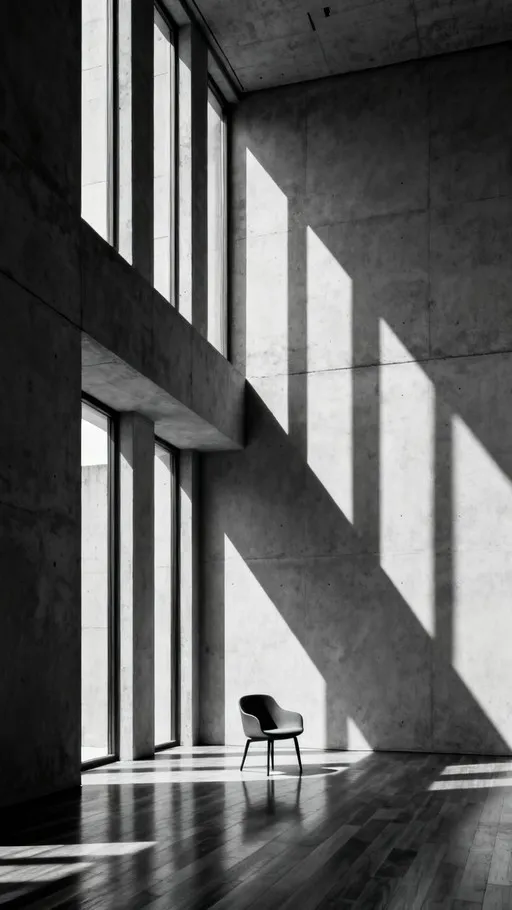
Photo: minimalist dark empty room dramatic shadow black and white, via images.stockcake.com
There is a particular kind of fear that arrives not in the scream but in the pause before it. Not in the door thrown open but in the hand resting motionless on the knob. Contemporary dark fiction writers have begun to understand something that horror cinema has largely forgotten: the imagination, when given only the barest outline of a threat, will construct something far more personalized and therefore far more devastating than any description the author could supply. The page that breathes, that hesitates, that withholds—this is where the real darkness lives.
In an era defined by content saturation, by algorithmic feeds that demand constant stimulation and increasingly explicit sensation, the deliberate refusal to elaborate has become one of the most radical and unsettling choices a writer can make. Minimalist dark fiction does not simply strip away ornament. It weaponizes the resulting emptiness.
The Architecture of Absence
To understand how minimalist dark fiction operates, one must first abandon the assumption that horror is fundamentally additive—that dread accumulates through accumulation. The tradition of maximalist dark writing, from the ornate Gothic chambers of Poe to the baroque cosmic architectures of Lovecraft, assumed that darkness required weight, that fear needed scaffolding. Contemporary minimalist practitioners work from the opposite premise: that weight can be implied through its conspicuous absence.
Consider the mechanics of a sentence that simply stops. A character opens a drawer. Finds something. Does not describe what it is. The narrative moves on. The reader, denied resolution, fills that vacancy with something drawn from their own particular reservoir of dread—something the author could never have predicted and could never have manufactured. The unspecified object in that drawer becomes simultaneously more personal and more universal than any described artifact.
This is not laziness. It is precision of a very demanding kind. Minimalist dark fiction requires the writer to understand exactly where the reader's imagination will leap and to create the precise conditions under which that leap becomes inevitable. The craft lies not in what is written but in engineering the negative space so that it cannot be ignored.
Restraint as Radical Act
The cultural context in which this aesthetic operates matters enormously. American readers in the current moment are accustomed to being told everything—to narrators who explain their psychological states in clinical detail, to plots that resolve ambiguity before it can fester, to horror that announces itself with chapter-length descriptions of viscera. The entertainment industry, including much of the mainstream publishing apparatus, has trained audiences to expect saturation.
Against this backdrop, a dark fiction writer who refuses to explain what the protagonist saw in the basement, who declines to characterize the nature of the relationship that ended so badly, who presents a grief without naming its object—this writer is committing an act of genuine subversion. The refusal to deliver expected information reads, at first, as withholding. Within a few pages, it begins to read as something far more troubling: the suggestion that some things cannot be explained, that some experiences exceed the capacity of language to contain them.
This is the deeper philosophical argument embedded in minimalist dark fiction. It is not merely a stylistic preference. It is a claim about the nature of the most profound human disturbances—that they resist articulation, that forcing them into complete sentences diminishes rather than illuminates them.
Sentence as Wound
The sentence-level craft of minimalist dark fiction deserves its own examination. Writers working in this mode have developed a distinctive toolkit: the declarative sentence stripped of modifying clauses, the abrupt paragraph break where continuity was expected, the pronoun whose antecedent is never fully established, the verb that implies an action without specifying its object.
These techniques function cumulatively. A single spare sentence might read as stylistic economy. Ten pages of such sentences produce something closer to dissociation—the reader begins to feel the ground of the narrative shifting underfoot, begins to sense that the gaps between words are not empty but occupied by something that does not wish to be looked at directly.
The white space on the page becomes functional. Short sections separated by significant gaps force the reader to do the work of bridging—and in that bridging, to participate in the construction of the horror rather than merely receive it. The reader becomes complicit. The darkness is, in some meaningful sense, their own.
The Silence That Indicts
There is a political dimension to minimalist darkness that is worth acknowledging directly. The most psychologically acute practitioners of this mode are not simply making aesthetic choices—they are making arguments about what language can and cannot hold. Many of the most powerful recent works in this register deal with trauma, with historical violence, with the specific American experiences of marginalization and loss that mainstream culture has consistently demanded be articulated in palatable, resolvable terms.
The refusal to articulate, in this context, becomes a form of resistance. To present a character's experience as fundamentally exceeding the explanatory frameworks available to them is to critique those frameworks. The silence is not empty. It is full of everything that has been demanded of people who were told their pain needed to make sense, needed to be legible, needed to arrive at a lesson.
Minimalist dark fiction, at its most serious, uses restraint not to evade difficulty but to honor it. The unspeakable is left unspeakable because that is what it is.
Reading the Void
For readers accustomed to the saturated landscape of contemporary entertainment, engaging with minimalist dark fiction requires a deliberate recalibration. It asks for a slower pace, for a willingness to sit with discomfort rather than rush toward resolution. It demands that the reader resist the trained impulse to skim toward explanation and instead inhabit the negative space.
What one finds there, if one stays, is not emptiness. It is a kind of dark mirror—the reader's own fears and preoccupations reflected back with a precision that more explicit writing could never achieve. The most disturbing books are not the ones that told you what to be afraid of. They are the ones that found, with surgical accuracy, what you were already afraid of and simply pointed at it without speaking.
In the age of algorithmic content, of infinite scroll and relentless stimulation, the page that goes quiet is the page that cuts deepest. FreeDarko Book has always understood that darkness is not a matter of volume. Sometimes, the most devastating thing a story can do is nothing at all.