When Actions Leave Scars: The Dark Fiction Reader's Hunger for Stories That Actually Punish
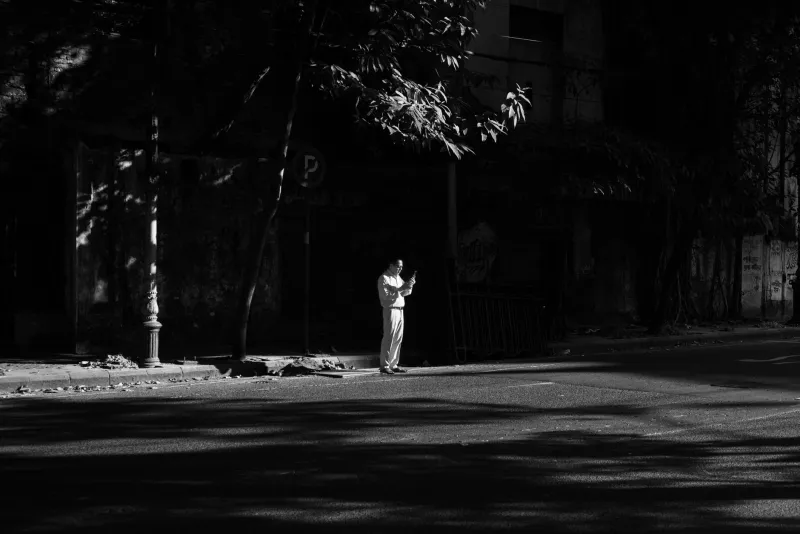
There is a particular frustration that accumulates quietly in the chest of a reader who has watched a protagonist detonate lives, betray intimacies, and shatter irreplaceable things—only to arrive at the final chapter unmarked, absolved, essentially unchanged. The narrative has offered the aesthetic of consequence without its substance. The darkness was decorative. And increasingly, a significant portion of the American reading public is refusing to accept that transaction.
The appetite for dark fiction that commits—that follows its violence and its moral failures to their logical, unsparing ends—has moved from a niche preference into something that looks very much like a cultural mandate. Understanding why requires looking honestly at the world these readers inhabit outside the page.
The Consequence-Free Landscape That Surrounds Us
Americans in 2024 occupy a peculiar civic reality: one in which the gap between action and accountability has never felt wider. Financial institutions absorb penalties that amount to rounding errors. Public figures weather revelations that would have ended careers a generation ago. Corporate decisions that poison communities produce settlements, not sentences. The cultural texture of daily life is saturated with examples of consequence deferred, diluted, or simply waived.
This is not merely a political observation. It is a psychological condition that readers carry with them into every story they open. When fiction then mirrors that same consequence-free logic—when characters devastate and drift onward, when moral catastrophes are tidied by the third act—it does not feel escapist. It feels like an extension of the very unreality readers are trying to escape.
Dark fiction that refuses this logic becomes, paradoxically, a sanctuary. The brutality of genuine consequence on the page offers something the surrounding world withholds: the confirmation that choices mean something. That weight is real. That the architecture of cause and effect has not been entirely dismantled.
What "Moral Weight" Actually Looks Like on the Page
The term is used frequently in literary criticism without sufficient precision. Moral weight, as dark fiction readers experience it, is not synonymous with punishment in any simple karmic sense. It does not require that every transgression be followed by proportional suffering. What it demands is irreversibility.
When a character in a consequence-driven narrative makes a catastrophic choice, something closes behind them. A door that will not reopen. A relationship reduced to ash that no apology can reconstitute. A version of themselves they will never recover. The reader feels this foreclosure viscerally—not as cruelty on the author's part, but as honesty. The story is acknowledging that certain actions permanently alter the terrain of a life.
Consider the structural logic of works like Paul Tremblay's A Head Full of Ghosts or Gillian Flynn's Sharp Objects—texts in which the damage accrued over the course of the narrative is not resolved but inhabited. Characters do not transcend their worst moments; they are shaped by them in ways that persist beyond the final sentence. Readers return to these books not despite their refusal to offer relief, but because of it.
The same architecture appears in literary horror, transgressive fiction, and a broad swath of independent dark publishing. The formal commitment to consequence is not an accident of genre convention. It is a deliberate craft decision that communicates trust—trust that the reader can bear the full weight of the story, and trust that the story will not insult their intelligence by pretending that weight disappears.
The Strange Comfort of Being Taken Seriously
There is something counterintuitive worth sitting with here. Comfort is not typically the emotion we associate with narratives that refuse consolation. Yet readers of consequence-driven dark fiction describe a specific form of relief that these stories provide—a relief that softer narratives, precisely because of their softness, cannot deliver.
The comfort is not derived from witnessing suffering. It is derived from the experience of coherence. A story in which actions produce lasting effects is a story operating according to recognizable logic. It validates the reader's own understanding of how damage works in actual human lives. It says: your instinct that this would hurt, that this would change everything, that this would leave a mark—you were right. The world you understand is real.
For a generation that has watched institutional reality become increasingly incoherent, this validation carries genuine psychological weight. Dark fiction that commits to consequence is not offering escapism in the conventional sense. It is offering a more rigorous version of reality than reality itself currently provides.
Craft as Commitment: How the Best Dark Writers Engineer Consequence
The technical execution of consequence-driven narrative is considerably more demanding than it might initially appear. It is not sufficient to simply make bad things happen. The cause-and-effect chain must be legible, specific, and cumulative. Each decision must register in the texture of subsequent scenes.
The most skilled practitioners of this approach—Carmen Maria Machado in Her Body and Other Parties, Mariana Enriquez across her story collections, the late Denis Johnson in Jesus' Son—share a commitment to what might be called earned darkness. Their most devastating moments do not arrive arbitrarily. They arrive as the inevitable terminus of a chain of choices and circumstances that the reader has been watching accumulate. The horror, when it comes, feels like recognition rather than surprise.
This is what distinguishes genuine consequence from shock value. Shock value is disconnected from causation—it lands without roots. Earned consequence is the opposite: it arrives already weighted with everything that preceded it, and it continues to exert pressure on everything that follows.
Independent dark publishers have been particularly attuned to this distinction. Small presses and digital collectives operating outside the commercial pressures that sometimes push mainstream publishing toward resolution have become reliable sources of fiction that refuses to flinch from its own logic. The freedom from market-driven narrative tidiness has allowed these publishers to cultivate writers who treat consequence not as an optional feature but as a structural foundation.
Reading as a Form of Moral Calibration
There is a final dimension to this phenomenon that deserves acknowledgment. Readers drawn to consequence-driven dark fiction are not, as they are sometimes characterized, drawn to nihilism or despair. The opposite argument is more persuasive.
To insist that actions carry lasting weight—to refuse the narrative comfort of erasure—is to insist that things matter. It is a fundamentally serious position. It treats human choices as significant, human damage as real, and human lives as terrain that can be genuinely altered for better or worse by what we do within them.
In that sense, the dark fiction reader's rejection of consequence-free narratives is less a flight from hope than a demand for a different, sterner variety of it. Not the hope that everything will be resolved, but the hope that the world is still coherent enough to be broken by the right decisions and the wrong ones alike.
That is not a small thing to ask of a story. It is, perhaps, the most serious thing a reader can ask. And the fiction that answers that demand honestly—that holds the line on consequence when every other cultural force seems eager to dissolve it—offers something that functions, in its own shadowed way, as a form of moral sustenance.
The darkness, in this reading, is not the point. The weight is the point. And weight, in a world increasingly designed to feel weightless, has become one of literature's most radical gifts.