Gathering in the Dark: How Readers of Cursed Literature Are Colonizing the Internet's Forgotten Spaces
There is a Reddit thread, last active sometime before the pandemic, that has never technically died. It was created to discuss a single novella — a self-published piece of cosmic horror that sold fewer than three hundred copies and received no mainstream coverage whatsoever. The thread has no moderators. Its formatting is inconsistent. Several posts are written in a style that blurs the line between literary criticism and personal confession. And yet, week after week, new voices arrive, drawn by some invisible current, to add their thoughts to a conversation that refuses to conclude.
This is not an anomaly. It is a pattern.
Across the fractured terrain of American digital life, readers of dark fiction — horror, transgressive literature, weird fiction, psychological noir, and everything that resists easy categorization — are quietly claiming real estate that the rest of the internet has abandoned or never bothered to develop. Forgotten subreddits. Private Discord servers with names that read like incantations. Substack newsletters with subscriber counts in the dozens, not the thousands. And in these improbable sanctuaries, something genuinely extraordinary is taking shape.
Why the Margins Become Home
To understand why dark fiction readers gravitate toward obscure digital spaces, one must first understand the particular alienation that defines their reading lives. Mainstream literary culture — the culture of bestseller lists, celebrity book clubs, and algorithm-driven recommendation engines — has always treated dark literature as a subordinate genre, something to be tolerated rather than celebrated. A reader whose deepest literary experiences have come from transgressive fiction, from horror that dismantles the self, from poetry that refuses comfort, has grown accustomed to finding that their most profound enthusiasms go unrecognized in conventional spaces.
The result is a self-selecting migration. When the popular platforms fail to provide genuine community — when the discourse is too shallow, too performative, too anxious about optics — dark fiction readers do not simply disengage. They relocate. They find the unlit rooms and they bring their candles.
This dynamic is not merely metaphorical. It maps directly onto the fiction these readers love. The haunted house that becomes a refuge. The cursed archive that holds more truth than the official record. The liminal space that the protagonist cannot leave — and, crucially, no longer wants to. The communities these readers build are, in a very real sense, living extensions of the texts that brought them together.
The Architecture of These Spaces
Each community type carries its own distinct character, shaped by the platform's limitations as much as by its possibilities.
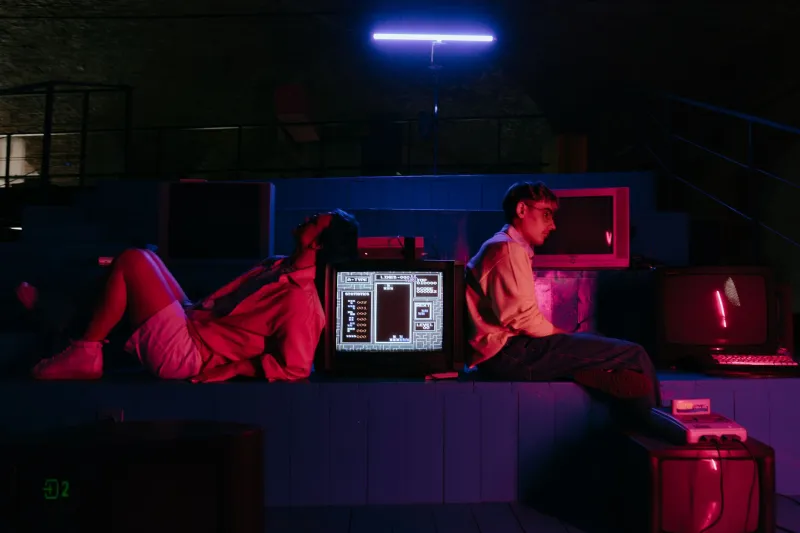
Discord servers dedicated to dark fiction tend toward the ritualistic. Many have developed elaborate channel structures that mirror the organizational logic of a literary journal: separate spaces for discussing craft, for sharing work-in-progress, for recommending obscure titles, and for what members often call "the void" — an unmoderated channel where conversation can drift into the genuinely strange. These servers frequently maintain reading schedules, ghost-story nights, and collaborative annotation projects for difficult texts. Membership is often kept deliberately small, with new members admitted through a process that functions less like a sign-up form and more like an initiation.
Substack has proven particularly fertile ground for the dark fiction community's more intellectually ambitious voices. Independent newsletters focused on horror criticism, weird fiction history, and transgressive poetry have found devoted audiences willing to pay for perspectives that no mainstream publication would commission. These newsletters operate with an intimacy that larger platforms cannot replicate — the writer addressing the reader directly, without editorial mediation, building a relationship that is as much epistolary friendship as it is criticism. Several of these newsletters have quietly become the most rigorous ongoing conversations about dark literature in America, known only to those who know to look.
The forgotten Reddit threads represent perhaps the most poignant phenomenon. These are communities that formed around a specific text, author, or subgenre, and then — rather than dissolving when the initial enthusiasm faded — entered a kind of suspended animation, waiting for the next reader to arrive. They function as time capsules and living archives simultaneously, preserving the initial energy of discovery while remaining open to new voices.
The Creative Incubator Effect
What distinguishes these communities from mere fan spaces is the degree to which they function as genuine creative laboratories. Dark fiction, perhaps more than any other literary tradition, benefits from sustained, granular conversation about craft. The mechanics of dread, the ethics of depicting psychological violence, the challenge of rendering the genuinely uncanny on the page — these are not questions that can be addressed adequately in a tweet or a five-star review. They require the kind of slow, exploratory dialogue that only intimate communities can sustain.
In practice, this means that the Discord server discussing transgressive horror is also, often, the place where the next generation of transgressive horror writers is being formed. Members share drafts. They challenge each other's assumptions about what darkness is permitted to do on the page. They argue about which independent presses are doing meaningful work and which are merely cosplaying transgression. The line between reader and writer, in these spaces, becomes productively blurred.
This is not incidental. It reflects a broader truth about how dark literature has always reproduced itself — not through institutional support, but through the passionate transmission of one reader's obsession to another. The small press movement, the zine culture of the 1980s and 1990s, the photocopied chapbooks passed hand to hand: these were all, in their essence, community-building exercises. The digital communities of today are the direct inheritors of that tradition, adapted to the particular possibilities and constraints of the current moment.
Belonging Through Shared Darkness
There is a temptation to romanticize these communities, to frame their marginality as pure virtue. That temptation should be resisted. These spaces carry real limitations: they can become insular, resistant to critique, prone to the particular ideological rigidities that small groups develop when they feel embattled. The intimacy that makes them powerful can also make them brittle.
And yet the core phenomenon they represent is genuinely significant. In an era when digital belonging has become both more necessary and more difficult to achieve — when the major platforms have optimized human connection into something that often feels like its opposite — these communities demonstrate that shared aesthetic obsession remains a powerful foundation for genuine relationship. The readers gathering in the internet's forgotten corners are not retreating from connection. They are insisting on a higher standard of it.
For those of us who believe that dark fiction occupies a vital and undervalued place in American literary culture, these communities are cause for something approaching hope. The literature survives. The conversation continues. And in the spaces nobody else wanted, something that might be called a movement is quietly, persistently taking shape.
The thread is still active. New voices are still arriving. The dark, it turns out, is not empty at all.