Gloriously Incomplete: The Rising Conviction That Fractured, Unfinished Dark Texts Tell More Truth Than Any Polished Novel
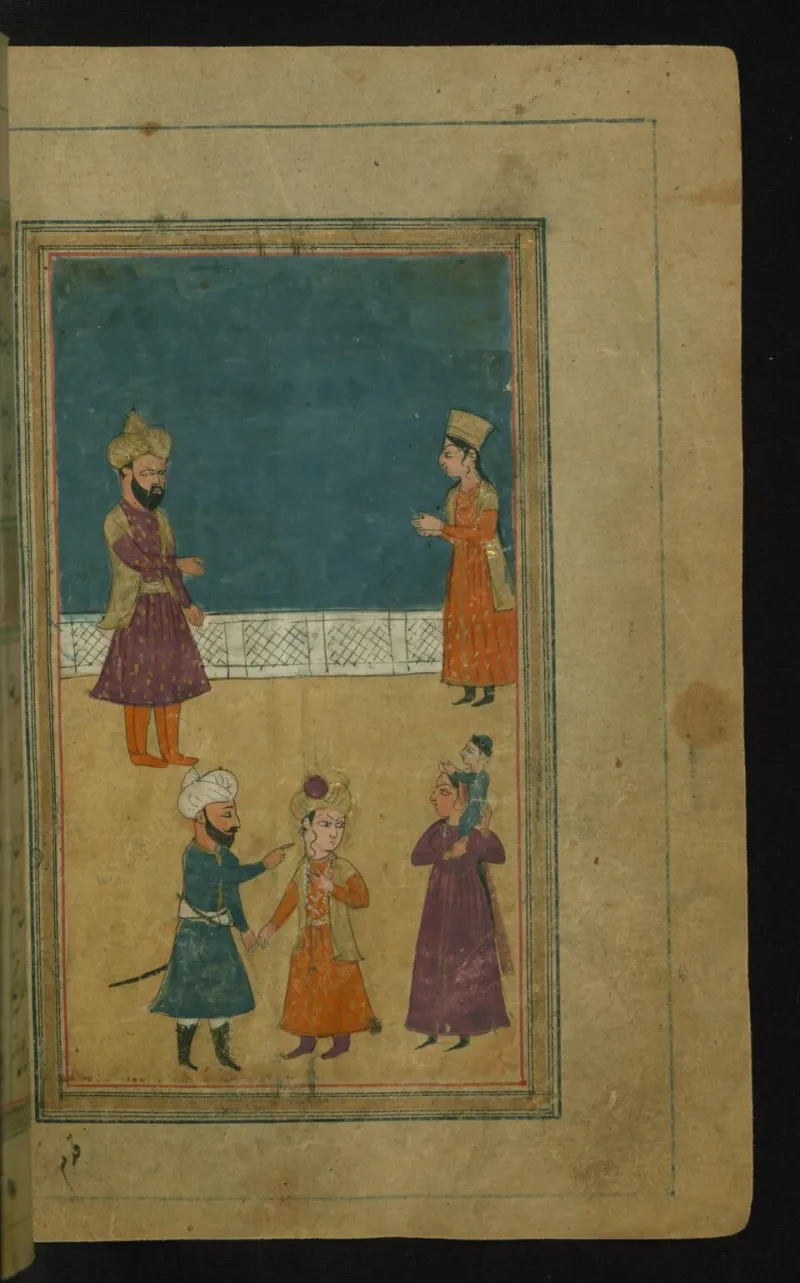
Photo: Jami, Public domain, via Wikimedia Commons
Let us begin with an admission that the publishing industry has spent considerable resources training us to forget: most stories do not end. They stop, or they continue beyond the frame of any telling, or they dissolve into the kind of ambiguity that no chapter break can contain. The finished novel—with its arc, its resolution, its satisfying closure—is not a reflection of how narrative actually operates in human consciousness. It is a commercial convention dressed in the clothes of artistic necessity.
A growing number of dark fiction writers in the American independent publishing space have decided, with increasing conviction and craft, to stop pretending otherwise.
The Polished Surface and What It Conceals
There is a particular kind of dishonesty that lives inside the well-made book. It is not the dishonesty of the lying narrator or the unreliable witness—those are acknowledged deceits, literary devices with long and distinguished histories. The dishonesty of the polished novel is quieter and more insidious. It is the dishonesty of completeness itself: the suggestion that experience, properly processed, arrives at conclusions; that grief resolves; that horror can be contained within the boundaries of a final chapter; that the darkness, once visited, can be left behind.
Readers raised on this convention have been taught to expect it as a condition of the reading contract. And for a very long time, the publishing industry—particularly at its mainstream commercial center—has been happy to enforce that contract, because books that leave readers satisfied are books that readers recommend, review favorably, and purchase in sequels.
But dark fiction has always had a complicated relationship with satisfaction. The genre, at its most serious, is not in the business of comfort. And a subset of its practitioners have begun asking a more fundamental question: if dark literature's purpose is to tell truths that more accommodating forms of storytelling refuse to tell, why should it honor the convention of the finished, coherent, resolved text?
Fragments as Philosophy
The fragment has a distinguished literary heritage that American publishing culture tends to undervalue. The Romantic tradition celebrated the torso, the ruin, the incomplete cathedral as aesthetic objects in their own right—not failures of completion but honest expressions of the limits of human creative ambition. Kafka's unfinished novels were published posthumously against his explicit wishes, and they became some of the most influential fiction of the twentieth century precisely because their incompleteness felt truer than any tidy ending could have.
What is new in the current dark fiction moment is the intentionality. Writers are not simply publishing unfinished work because circumstances prevented completion. They are making a deliberate philosophical statement by presenting work that refuses to finish—or that announces its own defectiveness as part of its meaning.
Independent publishing has been the essential enabler of this movement. The small press, the digital imprint, the self-published collection distributed through Bandcamp-style platforms or sold directly through a writer's newsletter: these channels exist outside the editorial infrastructure that has traditionally served as a filter against the incomplete, the formally unconventional, and the commercially unpredictable. A manuscript that ends mid-sentence—not through accident but through design—will not find a home at a major publishing house. It will find a home, increasingly, at the kinds of small operations that have made independent dark literature one of the most formally adventurous spaces in contemporary American writing.
What Breaks Open in the Breaking
The most compelling argument for the incomplete text is not theoretical. It is experiential. Readers who have encountered deliberately fragmented dark fiction—collections of notes that circle a horror without ever naming it; novels that stop at the moment of maximum dread rather than resolving it; manuscripts presented with their revision marks and abandoned alternatives intact—report an effect that differs meaningfully from what conventional fiction produces.
The gap, it turns out, is not empty. It is full of the reader. When a narrative refuses to complete itself, the reader's imagination is not simply left without resolution—it is activated in a way that the completed text forecloses. The unfinished sentence requires the reader to finish it, or to sit with the impossibility of finishing it, and that sitting is itself a form of meaning-making that no author can fully control or predict. The incomplete text is, paradoxically, a more intimate form of collaboration between writer and reader than the finished one.
Dark fiction understands this dynamic with particular clarity. Horror that is named is horror that is, to some degree, contained. Horror that is gestured toward and then abandoned—left at the edge of articulation, the sentence breaking off before the revelation arrives—is horror that the reader must carry forward into their own experience of the world. It does not stay on the page. It migrates.
The Rejection of Consumer Narrative
There is also a political dimension to this formal choice that is worth naming directly. The demand for narrative completion is, at its root, a demand shaped by consumer culture. We have been trained to expect that the cultural products we purchase will be complete, functional, and satisfying—that they will deliver what they implicitly promise. The unfinished text refuses this logic. It declines to be a product in the conventional sense. It insists on being an encounter.
For writers operating within the independent dark fiction space, this refusal is often conscious and principled. To publish a deliberately incomplete text is to assert that literature is not a commodity and that readers are not consumers whose satisfaction is the primary obligation of the work. It is an act of formal resistance to the smoothing, optimizing, and completion-testing that characterizes mainstream publishing's relationship with its audience.
This does not mean that the incomplete text is hostile to readers. On the contrary, the best work in this mode is characterized by a deep respect for the reader's capacity to tolerate ambiguity, to find meaning in absence, and to resist the reflex toward resolution that consumer culture has spent decades cultivating. It treats the reader as an adult—which, in the context of American publishing, remains a more radical gesture than it should be.
The Honest Wreckage
There is a phrase that recurs in conversations about this movement, spoken by writers and readers alike with something that sounds very much like relief: at least it doesn't pretend. The incomplete text, the abandoned manuscript, the collection of fragments that refuses to cohere—these do not pretend that the darkness has been processed, that the wound has healed, that the story has been told in full.
In a cultural moment saturated with content that is engineered for engagement, optimized for sharing, and structured to deliver dopamine at calculated intervals, the work that declines to perform its own completion carries a strange authority. It is not trying to win. It is trying to be honest about what honesty costs.
That may be dark literature's most important contribution to American reading life right now: the insistence that some truths do not resolve, and that the most faithful representation of those truths is a text that refuses, with full artistic intention, to pretend otherwise. The fragment is not a failure. It is a form. And in the shadows of its incompleteness, something genuine lives.